
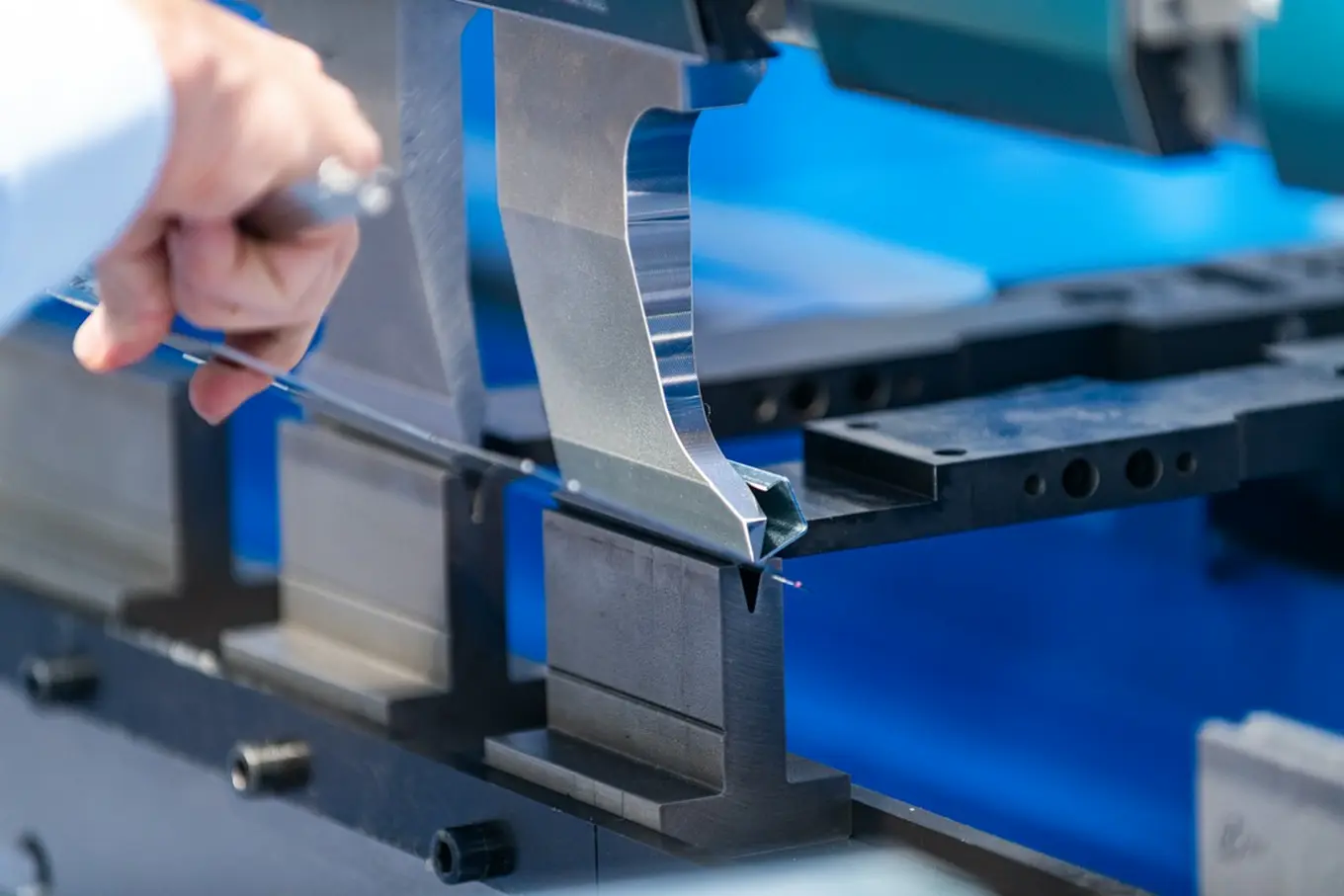
The operating speed of a press brake is a key parameter affecting production efficiency in the sheet metal working industry. Understanding the factors that influence this value enables processes to be optimised, which in turn saves time and resources. In this article, we will outline the most important factors affecting the operating speed of a press brake, such as the type of material, sheet thickness and the type of tools used in the machine.
Type of material and sheet thickness
One of the main factors affecting the operating speed of a press brake is the type of material being worked on. The physical and mechanical properties of various metals have a direct influence on the force required to bend them and the duration of this process. Materials with greater ductility and lower hardness can be machined more quickly than hard steel alloys.
The thickness of the sheet metal being processed is another important parameter affecting the operating speed press brake. The bigger it is, the more time and effort it takes to bend it. When processing thick sheets, greater pressing forces are required, which may result in a reduction in the press’s operating speed. It is also worth bearing in mind that an increase in sheet thickness may affect the requirements for the tools and technologies used in the bending process.
Length of the bend, type of tools and technology
The length of the bend also affects the operating speed of the press brake. The longer the edge, the longer it takes to bend it, which means the machine works more slowly. In the case of long components, it is necessary to use specialised tools and appropriate technology, which may further reduce the press’s operating speed.
Choosing the right tools and technologies is also crucial to the efficiency of a press brake. The use of high-quality dies and punches enables faster and more precise machining. Furthermore, the use of modern technologies, such as numerical control and measurement systems, enables the automation of processes and the elimination of errors, which also helps to increase the press’s operating speed.

 Polish
 English
 German
 French
 Portuguese
 Spanish