
Hydraulic presses are indispensable tools in industry, utilising the principle of force transmission via pressurised fluids to perform mechanical work. Their operating cycle is precisely designed to ensure optimum efficiency and safety in a wide range of manufacturing processes.
The operating cycle of a hydraulic press
Duty cycle hydraulic press It begins when the slide with the beam is at the upper dead centre (UDC), which marks the end of the press’s opening stroke. Next, under the pressure generated by the hydraulic pump, the ram moves downwards to the lower dead centre (LDC), which is closest to the die and marks the end of the press’s closing stroke. At this point, the actual pressing process takes place – hydraulic force is transmitted to the workpiece, resulting in it being shaped, cut or bent.
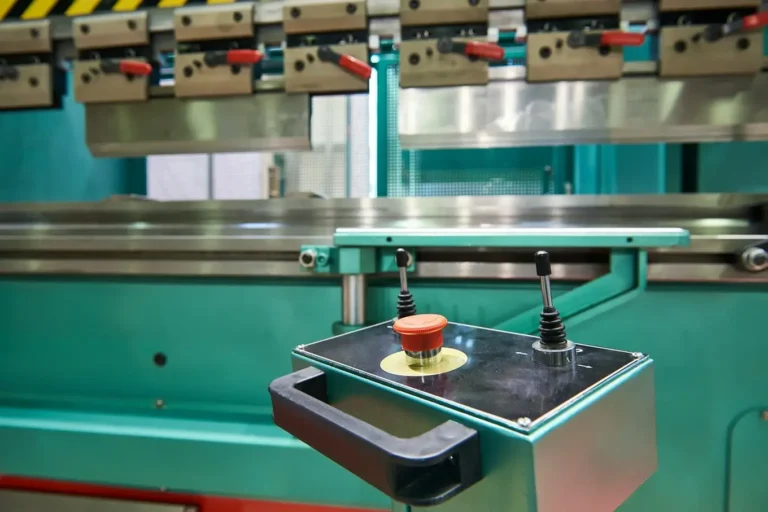
Once the work is complete, the hydraulic system reverses its operation, causing the ram to return to the top dead centre, preparing the press for the next cycle. The whole process is closely monitored by control systems, ensuring precision of movement and the safety of both the operator and the machine. Hydraulic presses are fitted with safety features, including tooling area guards and emergency stop systems, which protect against potential hazards.
The use and safety of hydraulic presses
Hydraulic presses are used in many industries, from the automotive to the aerospace sector, where high force and precision are required. They are indispensable in the production of components with complex shapes, where Controlling the force and speed of pressing is crucial. Thanks to their adjustable pressure settings, these presses can be tailored to the specific requirements of a given production process, making them extremely versatile in use.
Health and safety when working on hydraulic presses is a priority. For this reason, in addition to mechanical safeguards, advanced electronic systems are also used, which monitor the press’s operating cycle and, if necessary, they can stop the machine immediately. Regular technical inspections and adherence to operating procedures are essential for maintaining a high level of safety.

 Polish
 English
 German
 French
 Portuguese
 Spanish