
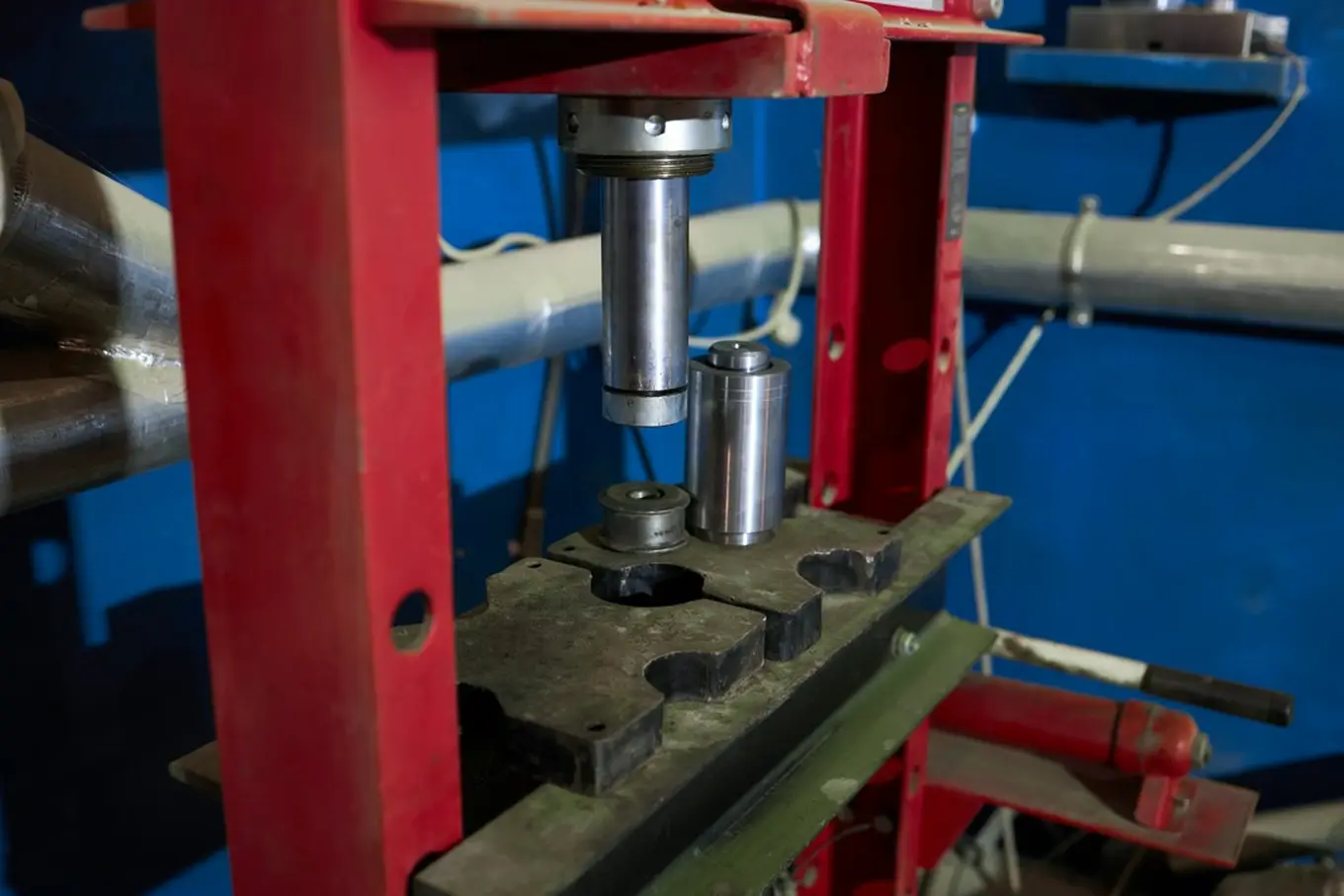
A hydraulic press is an extremely popular piece of equipment used in many industries, such as the automotive, aerospace, construction and engineering sectors. Its main function is to exert high pressure on the materials being processed, which enables the forming, cutting or crushing of various components. But what determines the pressure of a hydraulic press? In the following article, we will attempt to shed some light on this topic.
The design and operating principle of a hydraulic press
To understand what determines the pressure in a hydraulic press, it is worth first looking at its design and how it works. A hydraulic press consists mainly of two cylinders – a smaller one (auxiliary) and a larger one (working). The auxiliary cylinder contains a piston driven by a mechanical force, such as manual or electric power.
As the piston moves inside the cylinder, it generates pressure in the hydraulic system, which is transmitted to the working cylinder via hoses and valves. Inside the working cylinder there is a second piston which, under pressure, moves, by applying pressure to the workpiece.
Factors affecting the pressure of a hydraulic press
Among the technical parameters affecting the contact pressure hydraulic press These include, amongst others piston area, operating pressure and driving force. The larger the piston area and the higher the operating pressure, the greater the press force. The driving force affects the speed at which the auxiliary piston moves, which may influence the press’s operational efficiency.
The properties of the workpiece also affect the pressure of the hydraulic press. The hardness, elasticity or density of a material can affect the amount of pressure required to shape or cut it.
Furthermore, the operating conditions in which a hydraulic press is used affect its pressure. Factors such as temperature, humidity and air pollution are significant in this regard. High temperatures can reduce the viscosity of hydraulic oil, which in turn may lead to a drop in system pressure and reduced press pressure. Similarly, humidity and airborne contaminants can affect the performance of the hydraulic system.


 Polish
 English
 German
 French
 Portuguese
 Spanish